Presentación en vistas
Referencia
- Modo:
Modos Objeto, Pose y Edición
- Panel:
Este panel permitirá personalizar la apariencia de los huesos.
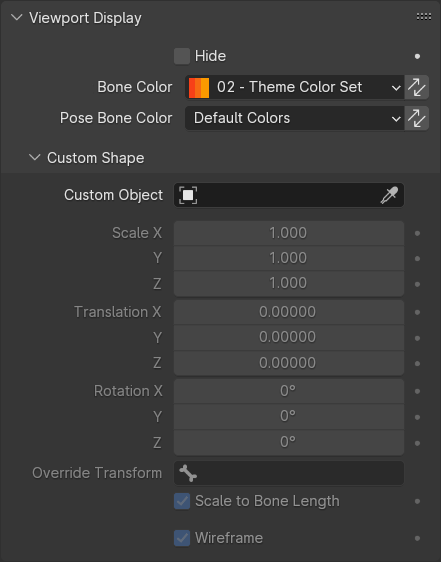
El panel Presentación en vistas en los modos Objeto/Pose.
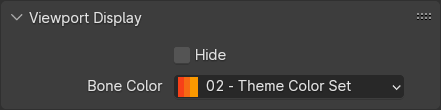
El panel Presentación en vistas en el modo Edición.
General
- Ocultar
Hides the bone in the 3D Viewport. When this is unchecked, the bone’s visibility is determined by the visibility of its bone collections.
- Mostrar como
This controls the way the selected bones appear in the 3D Viewport. This overrides the Display Type of the armature.
- Definido en el esqueleto:
Usará el modo de presentación del esqueleto.
- Octaedros:
Display bones as octahedral shape.
- Bastones:
Display bones as simple 2D lines with dots.
- Huesos flexibles:
Display bones as boxes, showing subdivision and B-Splines.
- Envolvente:
Display bones as extruded spheres, showing deformation influence volume.
- Estructura:
Display bones as thin wires, showing subdivision and B-Splines.
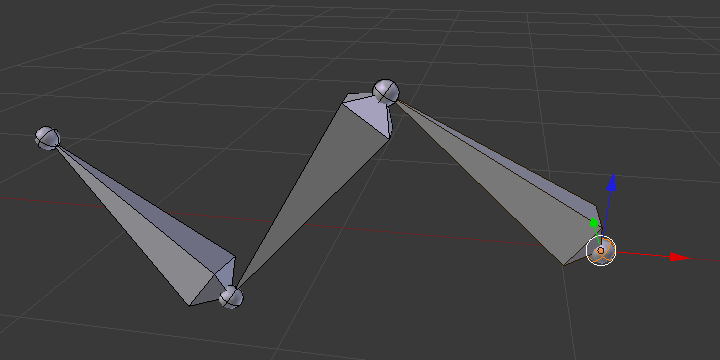
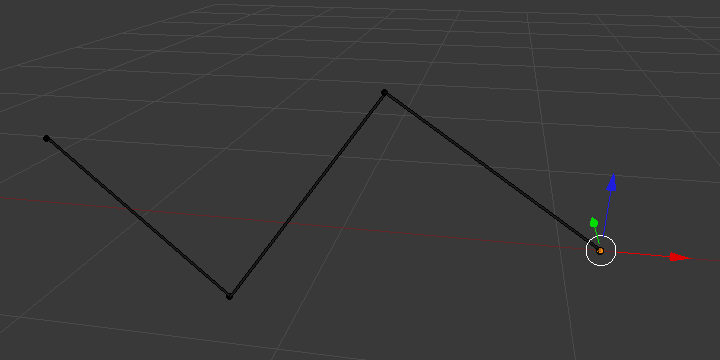
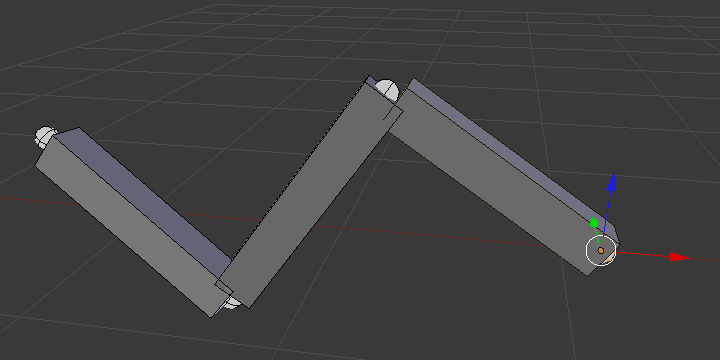
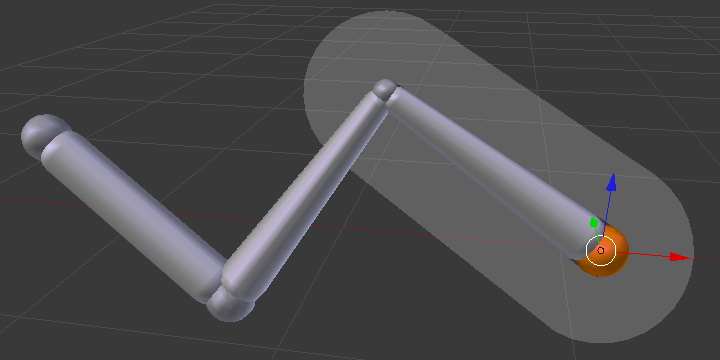
Colores de huesos
Bones can be individually colored. You can either choose a color set from the predefined theme list or define a custom one.
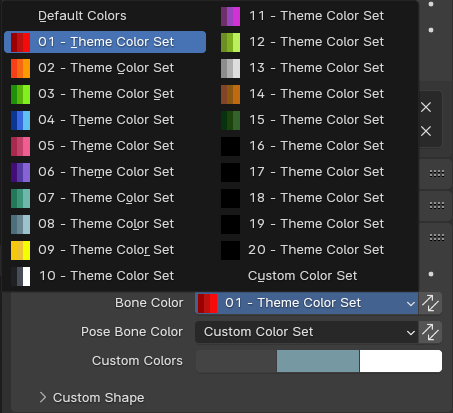
When selecting Custom Color Set, you need to define three colors: Regular (for when the bone is not selected), Selected, and Active.
You can temporarily disable all the color assignments by unchecking Bone Colors in the armature’s Viewport Display panel.
- Color del hueso
The bone’s primary color, affecting both Edit Mode and Pose Mode.
This color is stored on the armature data-block, so that if you have multiple armature objects that share this data-block, they will all use the same color.
- Copiar color a seleccionados
Copia el color del hueso Activo y lo aplica a todos los huesos seleccionados.
- Color del hueso (Pose) modo Pose
Lets you optionally override the above Bone Color in Pose Mode (by setting it to something else than Default Colors).
This color is stored on the Pose Bone, meaning it can be different in every armature object – even ones that reference the same data-block.
- Copiar color a seleccionados
Copia el color del hueso Activo y lo aplica a todos los huesos seleccionados.
Forma personalizada
Apart from custom colors, bones can also have custom shapes (in Object Mode and Pose Mode), using another object as a «template.»
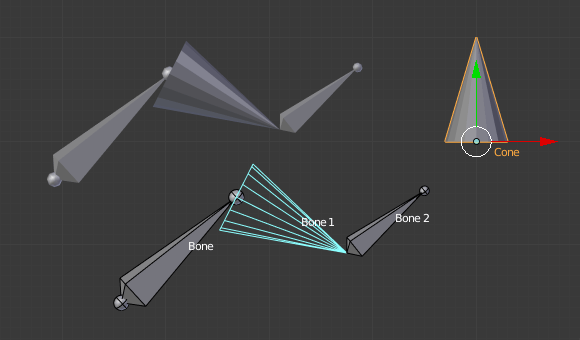
A bone referencing a cone as its Custom Shape.
You can temporarily disable these shapes by unchecking Shapes in the armature’s Viewport Display panel.
- Objeto personalizado
Objeto que definirá la forma personalizada del hueso seleccionado.
- Traslación X, Y, Z
Desplazamiento adicional a aplicar a la forma personalizada.
- Rotación X, Y, Z
Rotación adicional a aplicar a la forma personalizada.
- Escalar X, Y, Z
Additional scaling factor to apply to the custom shape.
- Redefinir transformaciones
A bone that defines the display transform of the custom shape. The shape defined in Custom Object will be placed at the location and orientation of that bone. This is only visual and does not affect the transform values of this bone.
- Affect Gizmo
The location and orientation of the Override Transform bone will be used for transform gizmos and for other transform operators in the 3D Viewport.
- Use As Pivot
Transform the bone as if it was a child of the Override Transform bone. This is useful in special cases, where the mesh is deformed away from the bind pose by a separate mechanism, for example Shape Keys.
Nota
While this affects gizmo interaction, it does not change the transform values of the bone, or how they are interpolated. As such the interpolation may not work as expected.
- Escalar a longitud del hueso
Whether the custom shape should be scaled by a factor equal to the bone’s length.
- Estructura
When enabled, the bone is displayed in wireframe mode regardless of the viewport’s shading mode.
- Grosor de estructura
El grosor de línea de la estructura de la forma personalizada.
Nota
Las formas personalizadas nunca aparecerán en las imágenes procesadas. Tal como cualquier hueso, sólo serán visibles en la Vista 3D.
The transforms of the template object are ignored. Moving, rotating, or scaling it will have no effect on its appearance in the armature.
The origin of each instanced shape object is at the root of the bone.
The rotation of each shape object is such that its Y axis lies along the direction of the bone.
For best results when Scale to Bone Length is enabled, make sure the template object is 1 unit in size along its Y axis. This will make it perfectly match the size of each bone.